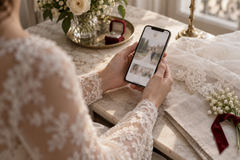
Once the dress is chosen, the questions from your guests start arriving: what time, where, can I bring a plus-one, what should I wear? A wedding website answers all of them in one link. Here is how to make one simply, and what it should say.
Why a wedding website helps
Paper invitations have limited space. A website holds everything the invitation cannot: the schedule of the day, directions to the venue, hotels nearby, the dress code, and a way for guests to reply. You update it once, and every guest sees the latest version. It also saves you dozens of repeated messages in the weeks before the wedding.
What to put on it
- Your names and the date, clearly, at the top.
- The schedule: ceremony, cocktail hour, dinner, party, and the brunch the next day if there is one.
- The venue: the address, a map, parking, and how to get there by train or taxi.
- Where to stay: two or three hotels or guesthouses nearby.
- The dress code: black tie, cocktail, garden party. For a church ceremony, a word on covered shoulders helps guests (our church dress code guide explains the usual rules).
- The RSVP, with a clear reply date.
- Your story: how you met, in a few lines and a few photos. Guests love it.
When to share it
Put the link on your save-the-date cards, six to eight months before the wedding for a destination wedding, four to six months for a local one. Set the RSVP date about six weeks before the day: that leaves time for the seating plan and the final numbers for the caterer.
How to make one without design skills
You do not need to code or to hire a designer. The simplest way is to start from a ready-made template and replace the words and photos with yours. Choose a design that matches the mood of your wedding: the same palette as your invitations, the same spirit as your dress and your venue. Keep it short: one page per subject, a few lines per section, large photos.
For our brides, we have partnered with Vowery, who design elegant wedding website templates you edit yourself in Canva. Serment Couture brides get 10% off with the code SERMENT10. If you are short on time, Vowery can also set the website up for you.
A few mistakes to avoid
- Forgetting the reply date for the RSVP.
- Sharing the link before the practical details are ready: guests read it once, early.
- Too much text. Guests read on their phones: short sections, clear titles.
- Leaving out the dress code, then answering the same question twenty times.
Questions
When should a wedding website go live?
With the save-the-dates: four to eight months before the wedding, depending on how far your guests travel.
Should the RSVP be on the wedding website?
Yes, if you can. Replies arrive in one place, and guests do not need to call or write.
What should a wedding website include?
Your names and date, the schedule, the venue with directions, where to stay, the dress code, the RSVP and a few words about your story.